
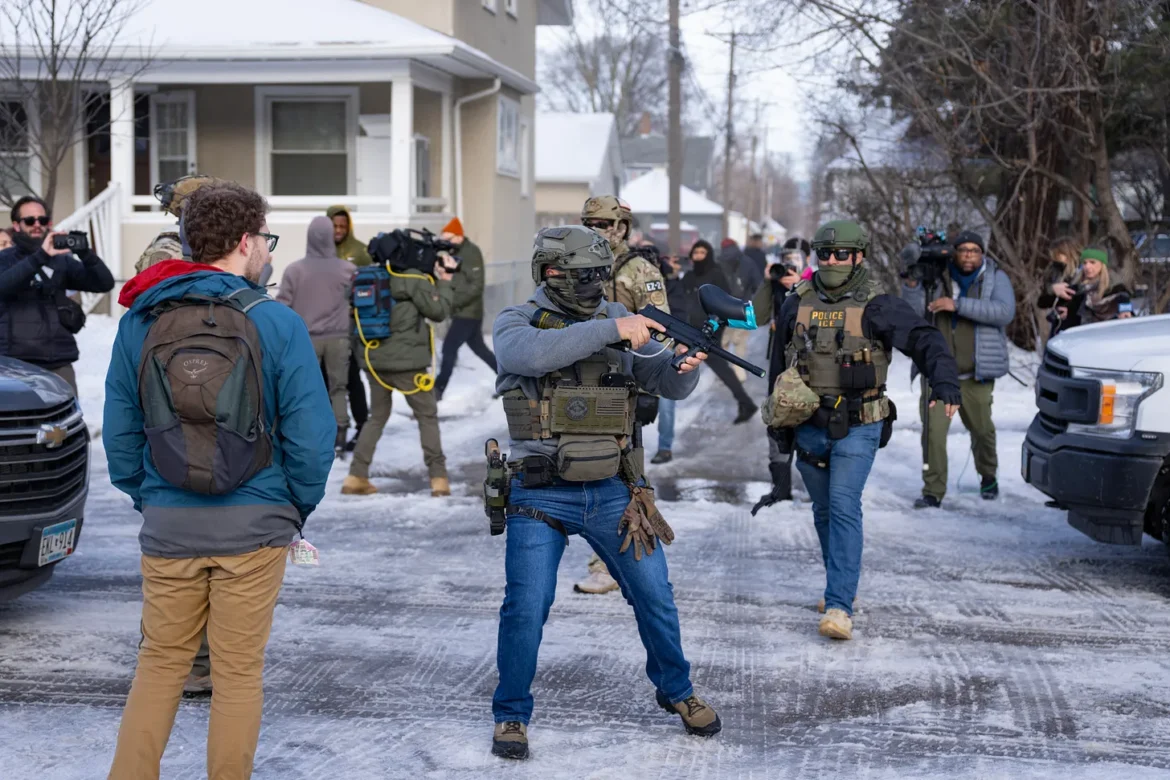
When we see the chaos and violence that ICE brings when a community is targeted with an influx of federal agents, many of us wonder how best to help our neighbors while keeping ourselves and our families safe.
This post should not be interpreted as legal advice. Additionally, the fact that an activity is legal does not guarantee protection from harassment, assault, arrest, or lethal force from federal agents. Individuals risk profiles can vary greatly and change depending on each scenario.
We urge our community members to do what they can safely do to help observe and report ICE activity in order to help our neighbors, but ask that each person use their own judgement and caution.
How to identify ICE/DHS vehicles and agents
Over-reporting of ICE activity creates a culture of fear. This is a deliberate tactic of DHS and an attempt to scare people into leaving the country. If you see suspicious activity, observe, take pictures, and notify the AIRC team using our Signal community hotline.
Vehicles
- CBP (Customs and Border Patrol) and FPS (Federal Protective Service) vehicles are generally clearly marked and easy to identify. They will have the agency’s emblem and a green or blue stripe. Typical vehicles will be Ford, Chevrolet, or Dodge trucks or SUVs.
- ICE vehicles are much harder to identify and will not be marked. The typical ICE vehicle:
- Is US-made such as: Ford Explorer, Dodge Durango, Dodge Caravan, Dodge Charger, Chevy Impala, Chevy Silverado, Chevy Tahoe, Ford Edge.
- Has very dark tinted windows and a police barrier between the front and rear seats.
- Can have civilian plates, dealer plates, or no plates at all.
- Is equipped with police lights in the visor, front grill, bumpers, and/or rear window seats.
Agents
- ICE agents will often wear civilian clothing under tactical vests, plate carriers, and other gear. They will typically have their faces covered with masks or neck gaiters.
- Special Response Team agents are sometimes seen wearing full military/tactical kits including camouflage fatigues, ballistic helmets, and body armor.
- On their bulletproof vests or clothing, agents can be identified with any number of agency badges or acronyms including:
- DHS acronyms: “ICE”, “HSI”, “CBP”, “ERO”, “SRT”.
- DHS unit names: “Immigration and Customs Enforcement”, “Customs and Border Protection”, “Special Response Team”, “Field Operations”.
- Generic names: “POLICE”, “FEDERAL OFFICER”, “FEDERAL AGENT”
What to do if you think you’ve identified ICE
Alert the AIRC Rapid Response Team.
- AIRC has a team of legal observers who respond quickly to reports of ICE activity and are trained to observe and agitate appropriately and effectively.
- If you believe you see ICE activity, alert the AIRC Rapid Response Team using the Signal community hotline.
If you wish to remain on the scene to observe
Document and Record
- Use the acronym SALUTE to remember the key information to record and share with AIRC:
- Size: How many agents do you see?
- Activity: What do they appear to be doing?
- Location: Where is this happening?
- Units: What law enforcement units do you see? Are local police on the scene?
- Time: When is this happening?
- Equipment: What equipment do you see? For example, the presence of long guns and/or door breakers may indicate the presence of the Special Response Team.
- Film the interaction from a safe distance if you are able to do so.
- Narrate where you are and what you see.
Share details with AIRC
- Do not share publicly any video of arrests or any names of arrestees without consent of the person/people impacted.
- Send any video and what you have documented to AIRC using the Signal community hotline.
DO NOT
- Do not interfere with ICE activities.
- This can result in felony charges, arrest, assault, or worse.
- You are legally allowed to observe and record, but should comply with reasonable requests from agents.
- Do not antagonize agents.
- While it is not illegal, and it should not be dangerous, the fact is that verbally antagonizing agents can heighten tensions and increase the likelihood of dangerous or even deadly confrontation.
- Do not share any information or post arrest videos without permission.
- Do not disclose names, immigration status, location, or any other personal information of any community members.
- Do not post video to social media without permission. This can endanger the neighbors we are trying to help protect.
- Do not assist ICE in any way.
- Agents may ask you to assist by opening a door or allowing them to access private spaces. Do not open doors, provide access, answer questions, or other materials.
- Do not run away if confronted by agents.
- ICE agents are permitted to make arrests for any federal offense committed in their presence or for which they have probable cause.
- If confronted by an ICE agent, ask “Am I being detained?” If the answer is “no,” leave calmly.
Sources and further reading:
- https://www.conmigra.org/
- https://www.conmigra.org/
- https://zeteo.com/
- https://uniondelbarrio.org/
- https://onoffense.substack.com/
Photo Credit: Photo by Alex Kormann/The Minnesota Star Tribune via Getty Images
Article Written By:
-Bo, Athens resident, musician, and dad.